


The Gervais Principle Today
Venkatesh Rao's The Gervais Principle has been rattling around in my head, because I think he is right about the problem and too fatalistic about the outcome.
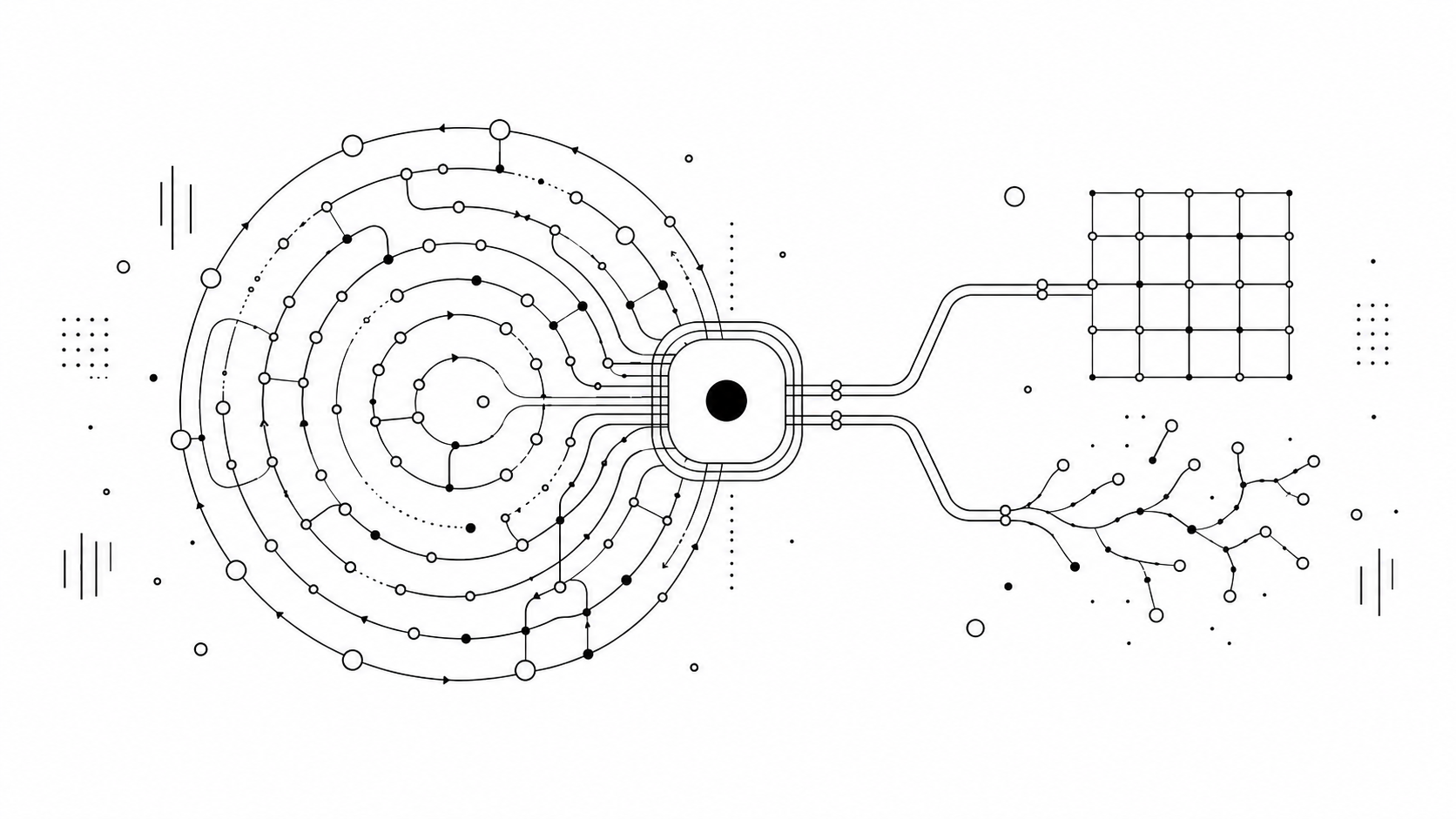
Rao builds on Hugh MacLeod's deliberately offensive hierarchy: Sociopaths at the top, the Clueless in the middle, Losers at the bottom. The names make the model easy to dismiss. Taken less literally, they describe three positions people end up occupying. Some choose. Most don't.
The Sociopaths treat the organization as an instrument for reaching a goal of their own. The Clueless become invested in the institution itself: its processes, its narratives, its internal markers of success.
The Losers, in Rao's telling, are on the wrong side of a value trade. They produce more than they capture, and they've accepted that in exchange for a salary. The label is economic, not personal. And Rao sees further than the name suggests: his self-aware Loser understands the bargain exactly and stops making work the central game of their life.
Which is where the label breaks. Everyone starts in this position. Some stay because they can't leave, some because it never occurred to them that they could, and some because they looked at the whole board and decided this was the better place to stand. Rao describes that third group with real sympathy and then scores them as losing anyway. But they gave up a claim on what the company becomes for work that stays inside its boundaries: income, stability, a life the job doesn't absorb. That isn't losing the trade. It's winning it in a currency his scoreboard doesn't count.
The taxonomy isn't what interests me. The lifecycle is.
The reactor
A company starts with a Sociopath and an idea, and recruits just enough Losers to make it real. Powerful, and unstable. As it grows, Rao argues, it needs a Clueless layer in the middle to dampen the reaction. To turn an explosion into a reactor.
I recognize the pattern. Nedap operated for a long time with a remarkably thin middle. Enormous autonomy. People who wanted to make things happen, surrounded by people perfectly happy doing good work without making the company the center of their lives.
It also became unstable. Products grow. Customers become dependent. There is more revenue to protect, more that can break, more to coordinate, more people needed simply to sustain what already exists.
So you add coordination, alignment, roles, process, management layers.
And they work. That's the part worth sitting with.
Here I depart from Rao: nobody manufactures the middle layer. No group sits in a room and decides to install a Clueless class. It's emergent. The organization finds an equilibrium, one reasonable decision at a time. More existing value → more people required to sustain it → more coordination → more management.
The Clueless layer isn't a pathology. It's a solution.
The problem is what it does next.
The solution starts feeding itself
Coordination exists because there is complexity underneath it. But coordination produces complexity of its own. More interfaces require more alignment. More alignment requires more information. More information requires more reporting, meetings and abstraction. Eventually people appear whose object of work is no longer the product, the customer or the market.
Their object of work is the organization.
And there is a reason this doesn't self-limit. Coordination doesn't only add work, it moves decisions. Something a team used to settle on its own now touches three others, so it gets aligned instead, and the decision ends up one layer above. Each transfer is defensible on its own terms. In aggregate they accumulate in the same place, and the layer receiving them gains scope from a process nobody has to intend. Not everyone feels this equally: it lands hardest on work that spans interfaces and barely touches work inside a well-bounded system.
More people → more complexity → more coordination → more management → more complexity.
At some point you're no longer stabilizing the reactor. You're building machinery to stabilize the machinery that stabilizes the reactor.
None of which is necessarily a problem. If you're content to run a good business on an existing product base, a thick middle is efficient at protecting what already works, and this essay is about nothing.
It becomes a problem the moment you want something more specific: to keep creating things, to move markets, to be led by product rather than by process. Measured against that, I think this is one of the largest long-term risks in a successful company. And for the first time, AI gives us a way out.
Don't eliminate the Losers
The tempting fix is to change the people: hire self-managing, entrepreneurial types who don't need a middle layer above them. I've reached for it myself. But it misreads the problem. The middle didn't grow because the people beneath it were the wrong kind. It grew because of what they were asked to sustain.
People play different games, and the deliberate stayers are playing theirs well. What matters is that organizations need them. They operate systems, preserve knowledge, and don't continuously try to reinvent everything. In mature products that millions depend on, that isn't a defect. It's the requirement.
So the question isn't how to eliminate the Loser layer.
It's how to stop the Loser layer from requiring an ever-growing Clueless layer above it.
Two games: Core and Create
The middle grows because there is more and more to maintain. Every successful product adds to the stock of things that must be kept running, and nothing ever leaves that stock. Fifteen years of shipping means fifteen years of accumulated systems, customers and promises, all of it needing people, all of those people needing coordination.
So treat the accumulated and the new as different games. Call the endpoints Core and Create, with Early and Late Scale in between.
Core protects what already works. Customers depend on it, revenue recurs, failure has consequences. And because the work sits inside a well-bounded system, it's also where autonomy survives: fewer interfaces, fewer decisions pulled upward. The economic value of the people sustaining it is enormous and nearly impossible to attribute. A developer who prevents a critical outage protects millions without creating one identifiable euro. You can't reward that by measuring what it adds, so the goal has to be defined differently: maintain or improve stability while continuously reducing the human effort required to sustain it.
AI is what makes that goal newly realistic.
A team spends ten hours a week on recurring maintenance. They automate part of it. Now it takes five. Something real has been created. Not revenue. Time. Five hours of human capacity the system no longer requires.
Now recall Rao's definition: the Loser produces more than they capture. That is exactly what happens next if nothing changes. The saved hours quietly refill with more work, and the surplus is captured entirely by the company. Rao's bargain, re-enacted in miniature.
So change it, in the currency these people chose in the first place: save time, share the time. Part of the hours saved come back as actual time. The company keeps the rest.
This isn't altruism. It aligns the bargain the stability-oriented employee actually wants with the economics of the company.
And it is aimed squarely at the ones who stayed on purpose. It offers more of exactly what they came for: work that stays inside its boundaries, now with the boundaries drawn tighter by their own hand. For the ones who never made the choice, the answer isn't a better Core offer. It's that Create is visible, real and open, so staying becomes something they decide rather than something that happens to them.
The employee gets: make this system require less of my life, and I get some of my life back. The company gets: grow the value this system sustains without growing the people required to sustain it.
The second-order effect matters more than the cost saving. The purpose isn't efficiency. It's bending the complexity curve.
Create is the opposite game. Nothing to protect yet, everything still to prove. Find a meaningful problem, make something dramatically better, move a market. And unlike Core, what you do here shows up: the link between action and new value is visible.
And here Rao names the pathology worth attacking. An overperforming Loser has revealed themselves as exploitable: whatever bargain they struck, they're now creating value well beyond it and capturing none of the difference. Ideal raw material for the middle-management path.
Wonderfully cynical, and I think right about the outcome but wrong about the mechanism. Nobody decides to capture an overperformer's surplus. They get moved into coordination because that is the largest reward the system has available, offered in good faith and usually received as one. The exploitation is structural, not authored.
Which means there is another response available: change the bargain.
If someone creates substantially more measurable value, let them participate in some of it. Not most, because a company only works if it captures far more than it distributes. But change the slope. Expected performance earns expected compensation; exceptional outcome creation should create meaningful upside.
This is not a sales commission bolted onto product development, and the outcome needs guardrails. Revenue extracted through a bad product, lock-in or short-term tricks isn't the game. The game is products that generate more meaningful use, and therefore more durable economics. Impact first. The business follows.
Notice that both games make the same correction to Rao's bargain, each in its own currency. Core returns surplus as time. Create returns it as money. And there is a third currency, the one the coordination layer quietly consumes: space, autonomy within clear constraints. The model pays it out by growing the supply. The fewer people the pile requires, the more Create environments the company can afford, and Create is where space is abundant: ownership of an outcome and the room to pursue it. The design doesn't just defend autonomy where it survives. It multiplies the places where it exists, and the number of people who get to work there.
And nobody needs to be classified into either game. Make the games explicit and people sort themselves.
What AI actually changes
Rao's 2009 model assumes something that has been robust for a century: as the productive base grows, the coordination requirement grows with it. More customers, more systems, more maintenance, more people, more coordination, more middle management.
AI breaks a link in that chain. If a mature platform can serve twice as many customers without twice as many people maintaining it, then 2× impact no longer requires 2× Core FTE, and therefore doesn't generate the coordination load that would demand another layer of organizational machinery.
That's the real prize. Not writing code faster. Scaling impact without scaling organizational complexity at the same rate.
Rao described his lifecycle as inevitable. And it was, for as long as the economics underneath it were fixed. They aren't fixed anymore.